
Article: 10 things I learned in 2025 building ALEMI
10 things I learned in 2025 building ALEMI
by our co-founder Christina
2025 was an intense year. Not a year of quickly ticking boxes, but one that challenged us deeply as an organisation and challenged me personally. Many things took longer than planned, some were harder than expected, and others turned out to be unexpectedly beautiful.
When I look back on this year, I don’t see individual moments as much as I see a process. One in which we grew as a team, became clearer as a brand, and in which I personally learned a lot about my limits, my responsibility and my own attitude.
Here are ten things I’m taking with me from this year.
1. A rebrand is not something you do “on the side”
We underestimated the impact of the rebrand from AMELI to ALEMI. Not because we were naive, but because you only truly understand what it means once you are in the middle of it. Suddenly everything is questioned at once: the brand, the future, decisions that go far beyond design.
For several months, ALEMI as an organisation was heavily tied up with this one topic. The focus was almost entirely there. Thinking about the Christmas business or products for 2026 suddenly felt very far away, almost secondary, because everything revolved around one central question: will this rebrand work?
What still impresses me today is how closely the team stood together during that time. People took on responsibilities far outside their original roles. It was exhausting, emotionally demanding, and at the same time deeply connecting.
My learning is clear: a rebrand needs time, resources and honest planning. It’s not a project. It’s a state.
2. My own capacity is different during pregnancy
This was probably the hardest learning for me personally this year. Normally, I’m quite good at assessing my own resources. I work a lot, often close to my limits, but seeing how much impact I can have with and through ALEMI gives me a lot in return.
During pregnancy, this balance shifted significantly. My stress tolerance was lower, my resilience wasn’t the same, my emotions were often harder to place. And as a consequence, there were missed opportunities, moments where I didn’t get the maximum out of things, mistakes that could have been avoided with just ten percent more energy.
The hardest part was realising that I couldn’t simply compensate for it. I have to accept that there are phases in which I can’t give more. And that this acceptance isn’t giving up, but a necessary step to stay healthy in the long run.
And to be very transparent here: I haven’t solved this yet, and I’m sure this will still be something I struggle with in 2026.
3. Niche products are not a side issue
As part of the rebrand, we removed some products from our assortment that weren’t among our absolute bestsellers. Rationally, that made sense. Emotionally and strategically, looking back, it wasn’t always the right decision.
Some of these products served very specific needs for certain customers. Our 16-inch laptop bag, or the SEEFELD, which performed extremely well in-store. They may not have been high-volume products, but they fulfilled needs that no other product did.
I learned that a collection can’t consist of bestsellers alone. It also needs depth and relevance for niches. Not everything that doesn’t scale easily is disposable.
4. A healthy product pipeline is essential
This year, we launched only one new model: the IDA SMALL. We had planned significantly more (and yes, you can look forward to 2026).
Product development takes time, focus and creative capacity. And that simply wasn’t always available this year. Sometimes you need to take a step back first. At times, it was incredibly frustrating how long things dragged on.
At the same time, I’m extremely grateful for the “luxury” we have of not being tied to external deadlines and only launching products when we are truly one hundred percent convinced. Patience can feel like stagnation, but it is often a very conscious quality decision.
5. A brand can move so much more than products
For me, ALEMI was never just a handbag brand. I always wanted it to stand for more than products. For values, attitude and perspective.
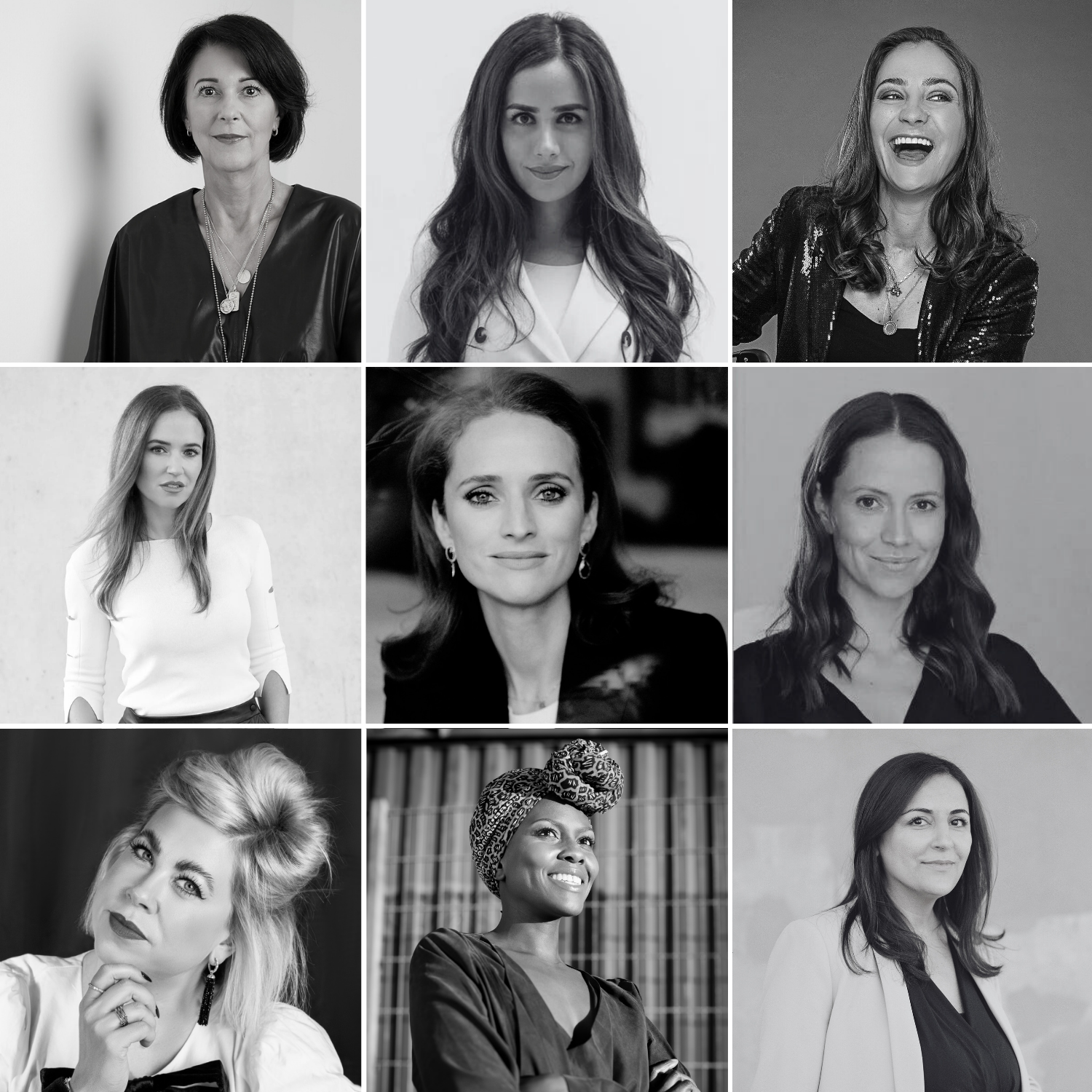
The NOT JUST LUCKY campaign was one of the most emotional highlights of this year for me. Showing that women’s success is rarely luck, but the result of hard work. Seeing how many women shared their own moments, how conversations emerged, how awareness was created.
It reminded me once again how powerful honest communication can be. And that brands can open spaces when they dare to take a stance.
It makes me proud to know that so many women now carry a NOT JUST LUCKY product and are reminded every day of how much they’ve actually achieved.
6. Dreams are allowed to be quiet
I’m someone who puts a lot of pressure on herself. Big dreams often feel ambivalent to me. Not because I don’t believe in them, but because I know how quickly visions can turn into inner pressure. A kind of self-protection, because I tend to forget to slow down or lose the joy in my work when the pressure gets too high.
That’s why many of my dreams stay quiet, as thoughts somewhere in the back of my mind. This year, some of them became reality. I was named one of the Top 100 Women in Business in Switzerland, we had a major article in Tages-Anzeiger, and I spoke on several quite large stages.
Maybe dreams don’t always have to be loud. Maybe it’s enough to give them space.
7. Operations push strategy aside faster than you think
When your head is full of operational tasks, there is little room left for strategic thinking. I feel this particularly strongly when key roles are unfilled, people are sick, or many are on holiday.
In those moments, I automatically dive deeper into day-to-day business. Decisions become more short-term, the perspective narrows. Especially as a CEO, this is dangerous, because foresight and direction are needed precisely then.
This year showed me very clearly how important structure, staffing and buffers are to remain strategically capable. Looking back, the biggest mistakes weren’t that a post didn’t go live, but that the right switch wasn’t set for the right project.
8. Not everything is within your control
2025 was shaped by external factors we couldn’t influence. US tariffs, rising material costs, delivery delays, supplier mistakes, increasing marketing costs, declining purchasing power.
There were many moments where one issue followed the next. “Not this as well” could have been the headline of many weeks. Situations that weren’t planned and still had to be solved.
My learning is simple but important: you can’t control everything, but you can almost always respond. And no matter how professionally set up you are, these kinds of incidents will always happen. It’s better to learn how to accept that.
9. Values only become real when decisions are uncomfortable
Talking about values is easy. Standing by them is not, especially when they come with real consequences.
This year, our material and production costs increased significantly. We tried for a long time to absorb this internally, but at some point we were forced to adjust our prices. Not lightly and not happily, but out of conviction. The alternative would have been to compromise on quality or on working conditions. And that was never an option for us.
Decisions like these rarely feel good in the moment. You know they need to be explained, that they will raise questions, maybe even criticism. But this is exactly where it becomes clear whether values are truly lived or just part of a nice story.
For me, this was one of the clearest learnings of the year: values are not a marketing tool. They are a compass. And sometimes they don’t lead you down the easiest path, but the right one.
10. We didn’t give up – and that’s what makes me proud
Despite all the challenges, one thing is very clear: we achieved a lot this year. We grew by over 30 percent, despite the rebrand and despite an extremely difficult phase for e-commerce. And we did so without significantly increasing the size of the team.
Many things took longer than I would have liked. But we never stopped. We kept building, kept deciding, kept believing.
2025 wasn’t an easy year. But it was a strong one. And I move into the next chapter with deep respect for this team, this brand and this journey.